Overview
The goal of this workshop is to bring together researchers and practitioners interested in modeling, reconstructing, or generating (dynamic) 3D objects/scenes in challenging, in-the-wild settings. With recent advances in 3D learning, the widespread availability of 2D and 3D visual data, and the predominance of image/video generative models, we believe now is a pivotal moment to tackle these challenges and make 3D vision more robust, accessible, and cost-effective. By fostering communication and highlighting important work in these areas, we hope to inspire new research topics and breakthroughs. Given recent advances in video generative models and dynamics modeling, we strongly encourage contributions not only from standard 3D topics, but also from broader 4D-related directions. We also welcome contributions that challenge the necessity of explicit 3D or 4D representations.
Invited Speakers
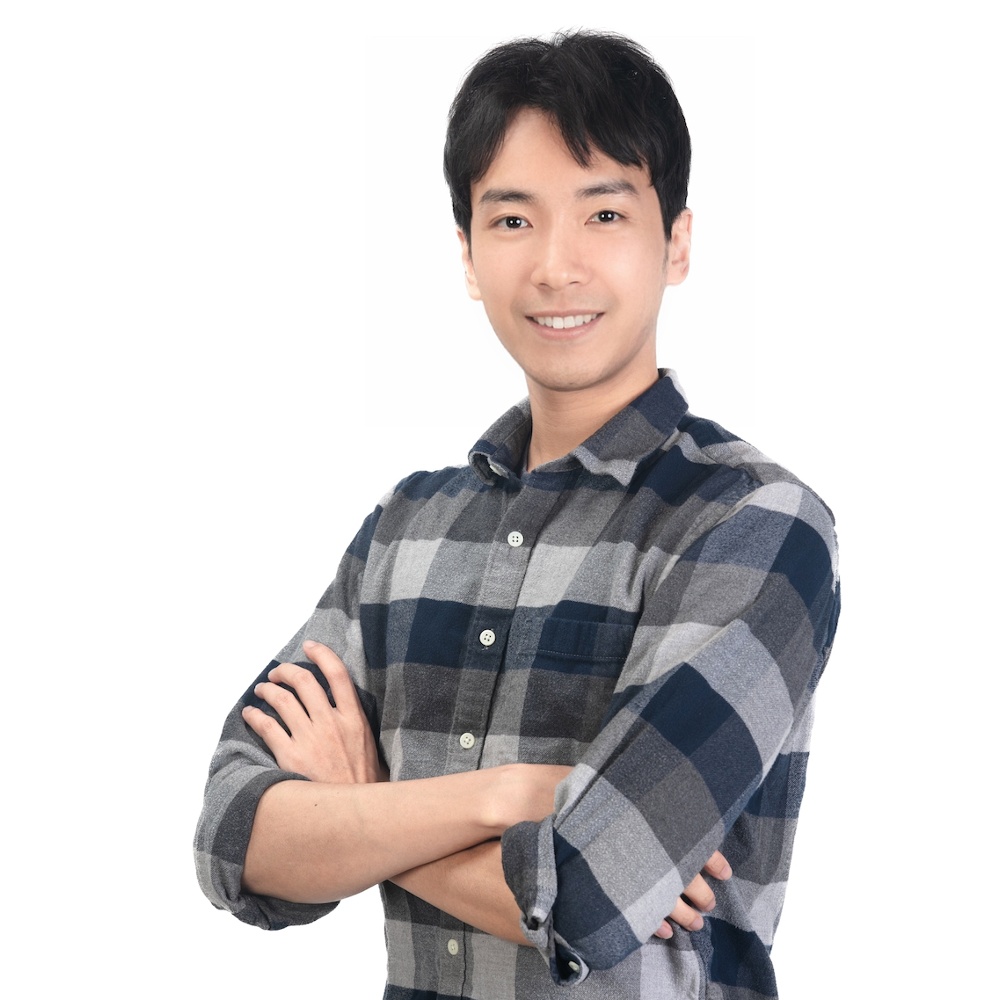
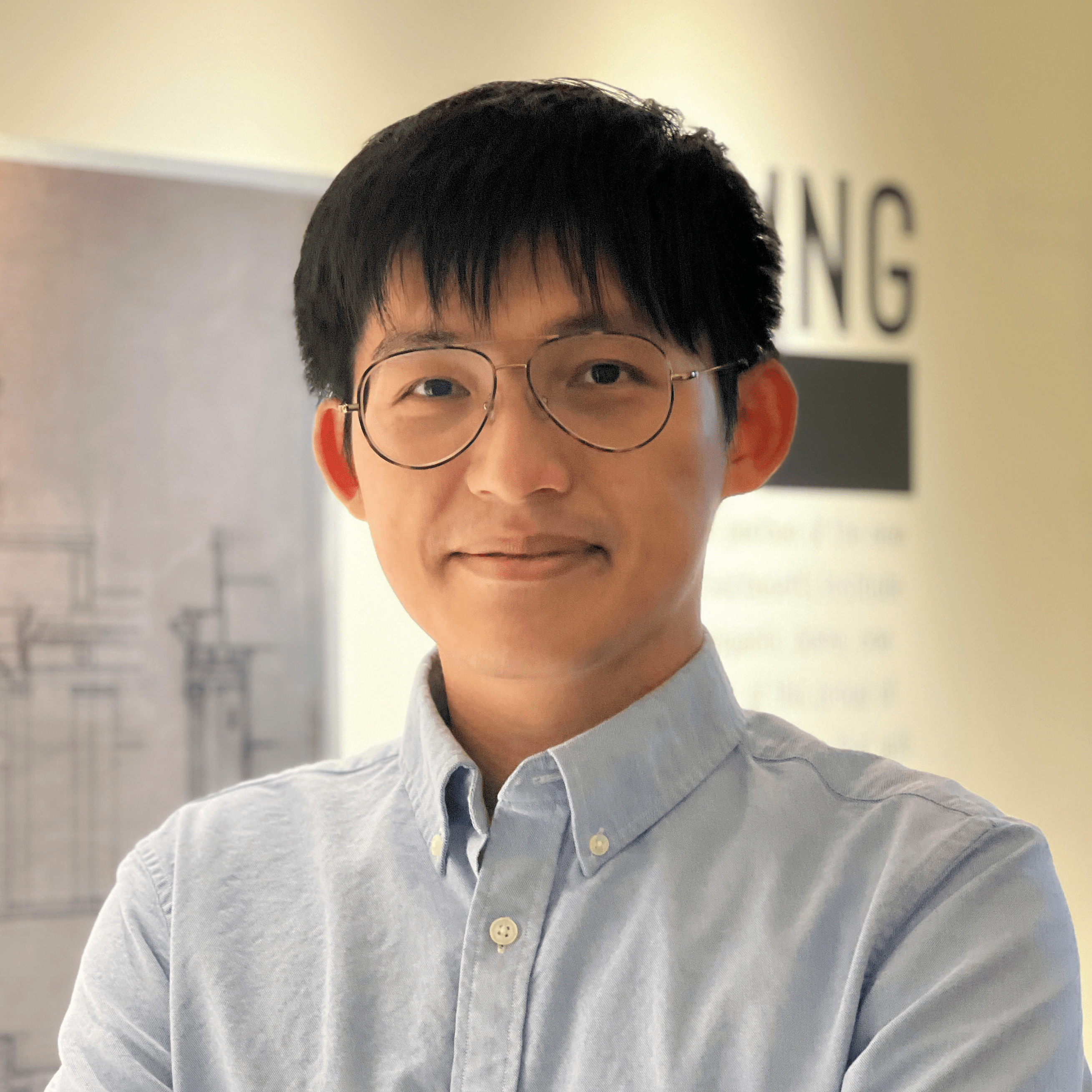
Yu-Lun Liu
National Yang Ming Chiao Tung University
Yu-Lun Liu is an Associate Professor of Computer Science at National Yang Ming Chiao Tung University. His research spans image and video processing, computer vision, and computational photography, combining machine learning with geometric and domain-specific insights.

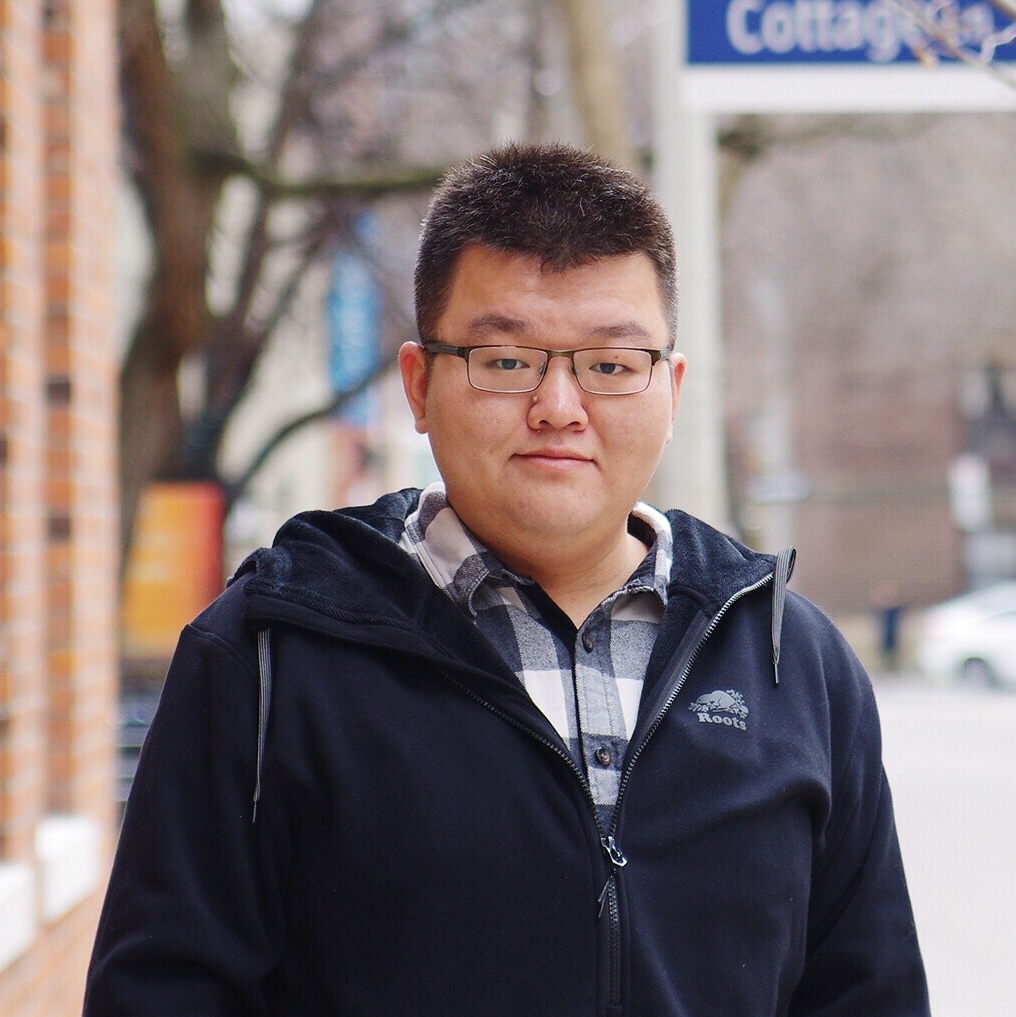
Sagie Benaim
Hebrew University of Jerusalem & Amazon
Sagie Benaim is an Assistant Professor (Senior Lecturer) at the Hebrew University of Jerusalem and an Amazon Scholar. His research brings together computer vision, machine learning, and graphics to develop efficient methods for reconstructing, generating, and understanding dynamic 3D worlds.

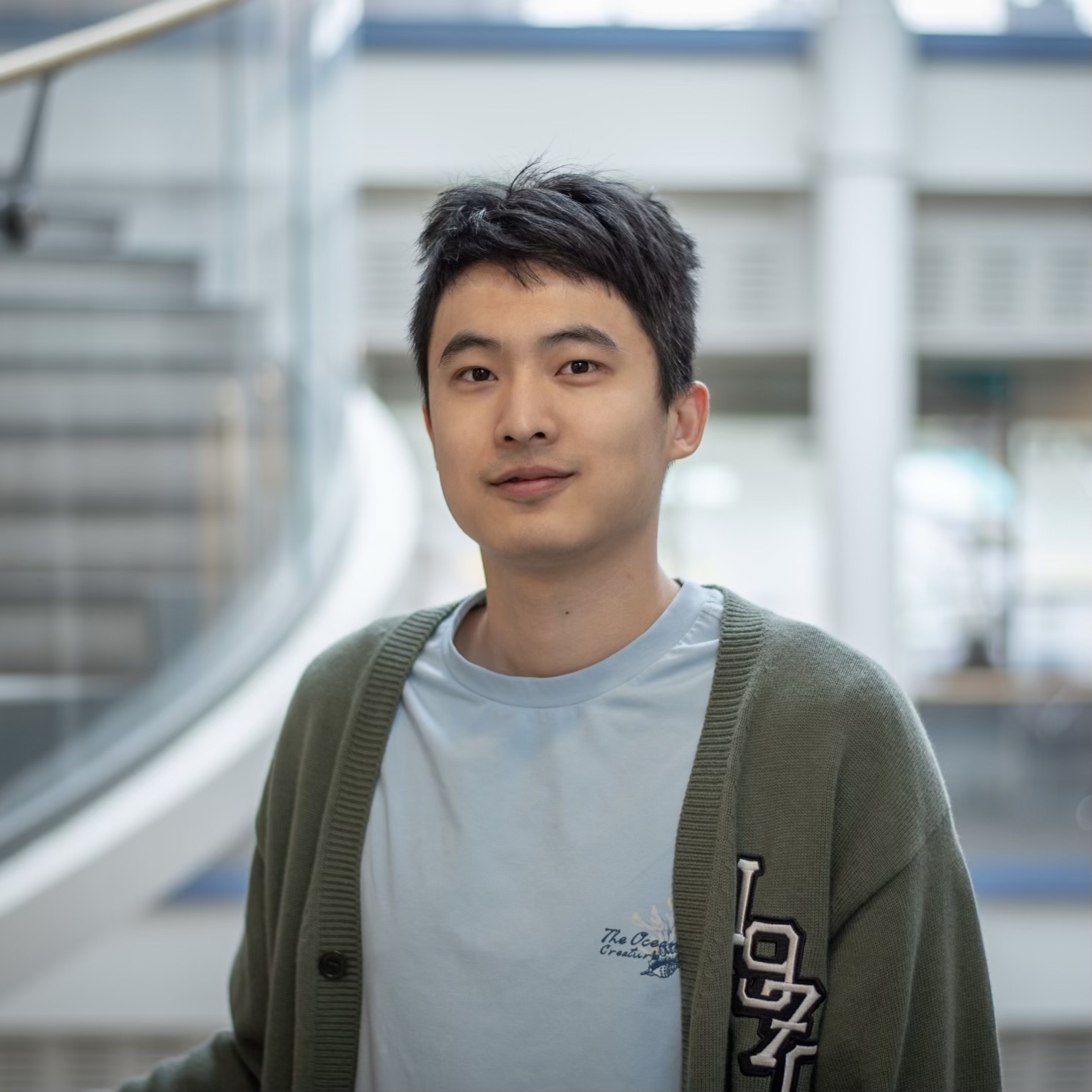
Vincent Sitzmann
Massachusetts Institute of Technology
Vincent Sitzmann is an Associate Professor at MIT and leads the Scene Representation Group at CSAIL. He develops world models that learn from vision and interaction, enabling machines to represent their environments, anticipate what happens next, and act autonomously across vision, graphics, and robotics.

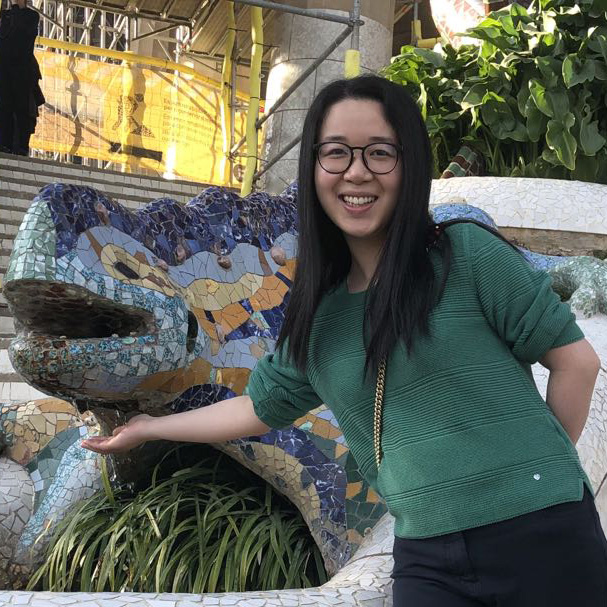
Georgios Pavlakos
The University of Texas at Austin
Georgios Pavlakos is an Assistant Professor of Computer Science at UT Austin. His research spans computer vision, machine learning, and robotics, with a focus on recovering people and human-object interactions in 3D and 4D from images and videos, including challenging in-the-wild observations.

Ruohan Gao
University of Maryland, College Park
Ruohan Gao is an Assistant Professor of Computer Science at the University of Maryland, College Park, where he leads the Multisensory Machine Intelligence Lab. His research develops systems that integrate sight, sound, and touch to perceive, understand, and interact with complex multisensory environments.


Schedule
| 13:30 - 13:35 | Opening Remarks | |
| 13:35 - 14:05 | Invited Talk 1 | Vincent Sitzmann (MIT) |
| 14:05 - 14:35 | Invited Talk 2 | Sagie Benaim (Hebrew University of Jerusalem) |
| 14:35 - 14:50 | Spotlight Presentation | Yijun Yuan (Tsinghua University) |
| 14:50 - 15:30 | Poster Session | |
| 15:30 - 16:00 | Invited Talk 3 | Georgios Pavlakos (UT Austin) |
| 16:00 - 16:30 | Invited Talk 4 | Yu-Lun Liu (National Yang Ming Chiao Tung University) |
| 16:30 - 17:00 | Invited Talk 5 | Ruohan Gao (University of Maryland, College Park) |
Related Workshops
- 3D Scene Understanding Workshop covers the broad scope of 3D scene understanding, while our proposed workshop dive deeper into the challenges and methodologies of 3D modeling and reasoning under in-the-wild, challenging, and sometimes extreme setup.
- Long-Term Visual Localization under Changing Conditions focuses on the task of visual localization. Our workshop takes a broader lens, covering the challenges and applications across various 3D computer vision tasks.
- Image Matching: Local Features & Beyond focuses specifically on the task of cross-view feature matching. While 3D modeling and alignment is one of our topics of interest, our focus is broader. Additionally, instead of the traditional, classic setup, we are interested in challenging cases such as sparse viewpoints with small overlaps.
- Learning 3D with Multi-View Supervision explores multi-view cues for 3D deep learning for various tasks, including recognition, detection, segmentation, and generation. While our workshop also concerns these techniques and tasks, we focus more on how to generalize these algorithms to challenging and extreme real-world setup.
- Workshop on Computer Vision in the Wild covers a wide range of topics in computer vision, while we focus on studying the challenges and impact of existing algorithms and systems through the lens of 3D.
Call For Posters
Wild3D 2026 will not run a separate paper-review track. Instead, we will be collecting interest for poster presentations at our workshop. If you are interested in presenting your work, please fill out this Google form. We especially welcome relevant work that has already been accepted at ECCV 2026 or another peer-reviewed venue. Posters are non-archival and will not appear in proceedings. We will follow up on the status of the poster presentations in the end of August.- Poster Interest Form: here.
- Poster Interest Deadline: August 25, 2026, 23:59 Anywhere on Earth.
- Notification to Presenters: August 28, 2026.
Topics of Interest
- Data and Modality: What type of data provides the most useful information for (dynamic) 3D modeling? Do we need explicit 3D data or is video data sufficient? What is currently lacking in this area? What datasets and benchmarks are crucial to validate the effectiveness of 3D/4D algorithms in the wild?
- Alignment: How can we align observations that exhibit significant variations in appearance, motion (articulation), lighting, contents, and viewpoints? How can we register images or videos with little or no overlap?
- Modeling: How can we construct accurate 3D models from sparse, noisy, incomplete, or dynamic observations?
- Representation: What are the most suitable representations for 3D modeling and reasoning? Do we truly need explicit 3D representations, or could view synthesis and video generative models be sufficient?
- Knowledge and Reasoning: How can we represent, learn, and encode commonsense knowledge of 3D objects and scenes -- such as part structures, articulations, and affordances -- and leverage it for various 3D tasks, including reasoning, dynamic modeling, reconstruction, and generation?
- 4D (Dynamic 3D): What is the best way to represent and model the dynamic 3D world? What priors are critical for its success? How can we improve 3D understanding via 4D modeling?
- Risks and ethical considerations: How can we mitigate the risks of robust 3D modeling, reconstruction, and generation techniques? How do we address relevant ethical questions, such as invasion of privacy, spreading misinformation, and credit attribution?
- Applications: What new applications can be unlocked by developing more robust 3D algorithms, and what modifications are needed? For example, how can we adapt existing (dynamic) 3D modeling techniques to better support robots operating in challenging environments? How can we leverage 3D priors learned from images to enable photorealistic content creation? How can we build on video foundation models to enhance our 3D understanding of the world? Are there other exciting applications for in-the-wild 3D modeling for domains such as construction, agriculture, and remote sensing?
Invited Posters
- SkySplat-OV: Generalizable Language Gaussian Splatting for Open-Vocabulary Scene Understanding from Sparse Satellite Views
- Learning Global Camera Poses from Noisy View-Graphs for Structure from Motion
- ETCH-X: Robustify Expressive Body Fitting to Clothed Humans with Composable Datasets
- Poppy: Polarization-Based Plug-and-Play Guidance for Enhancing Surface Normal Estimation
- OmniFit: Multi-modal 3D Body Fitting via Scale-agnostic Dense Landmark Prediction
- 3DFuser: In-Cabin Near-Infrared Monocular Depth Estimation from Static 3D Priors
- DualCamCtrl: Dual-Branch Diffusion Model for Geometry-Aware Camera-Controlled Video Generation
- DF3DV-1K: A Large-Scale Dataset and Benchmark for Distractor-Free Novel View Synthesis
- Skyfall-GS: Synthesizing Immersive 3D Urban Scenes from Satellite Imagery
- Bootstrapping Articulated 3D Reconstruction from 2D Image Collections
- Honey, I Shrunk the Arc de Triomphe!
- MAMMA: Markerless Accurate Multi-person Motion Acquisition
- Rigid 3D Object Alignment: Optimization vs. Feed-Forward Prediction
- Scal3R: Learning Efficient Multi-Relative Pose Query for Scalable Online 3D Reconstruction
- GenRA: End-to-end Framework for LLM-Driven Animation of Rigged 3D Models
- Relaxing Accurate Initialization for 3D Gaussian Splatting